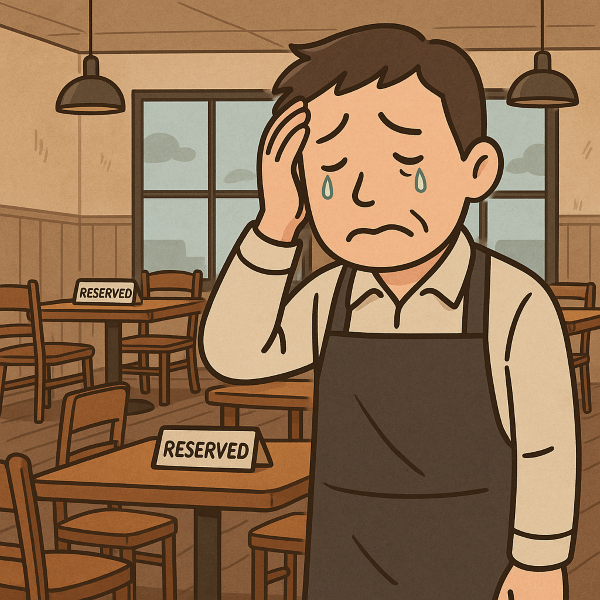
Surge in ‘No-Show’ Scams Leaves Korean Small Businesses Reeling (Image supported by ChatGPT)
SEOUL, May 19 (Korea Bizwire) — A wave of sophisticated scams targeting small business owners is spreading across South Korea, with perpetrators posing as celebrity managers, politicians, and government officials to orchestrate large-scale “no-show” fraud schemes.
According to police reports, these scammers typically place phone calls posing as aides to well-known public figures—such as K-pop stars, lawmakers, or civil servants—requesting group reservations at restaurants or bulk purchases of goods.
Victims are then instructed to purchase expensive items, particularly luxury wine, from specific suppliers, with promises that payment will be made on the day of the event. The fraudsters then disappear without paying.
One restaurant owner in Suwon, Gyeonggi Province, recently lost KRW 30 million (approx. $22,000) after wiring money to buy wine for a post-concert dinner allegedly requested by a celebrity agency. Days passed with no follow-up, and the agency later confirmed it had no knowledge of the order. The wine supplier’s identity was fabricated.
Similar cases were reported this month in Cheonan, where a man falsely claiming to be an aide to a Democratic Party lawmaker placed fake group reservations, requesting wine worth over KRW 10 million, and never appeared.
Other scams involved impersonators posing as fire officials and government procurement officers, seeking large orders for firefighting suits or tactical gear and requesting third-party payments on the grounds of “budget delays.”
These schemes are difficult to trace, as they are conducted entirely via burner phones and text messages, with fake business cards and spoofed company names. Fraudulent accounts used for payment are often opened under stolen or borrowed identities, making law enforcement efforts even more challenging.
The impersonated parties—including celebrities and political campaigns—are also suffering reputational damage. The production team behind the SBS program Running Man recently issued a public warning after a scammer used its name in a failed attempt to defraud a restaurant.
The Democratic Party also denounced a recent scam that involved impersonating its presidential campaign to order fake name cards and collect payments.
Police are urging business owners to remain vigilant. “Government agencies never place large purchase orders or request payments over the phone,” a police spokesperson said. “For large group bookings or unusual requests, demand partial prepayment and never agree to proxy purchases.”
With economic uncertainty mounting, authorities warn that these no-show scams are becoming more frequent—and increasingly creative—leaving many small business owners vulnerable to financial loss and emotional distress.
M. H. Lee (mhlee@koreabizwire.com)