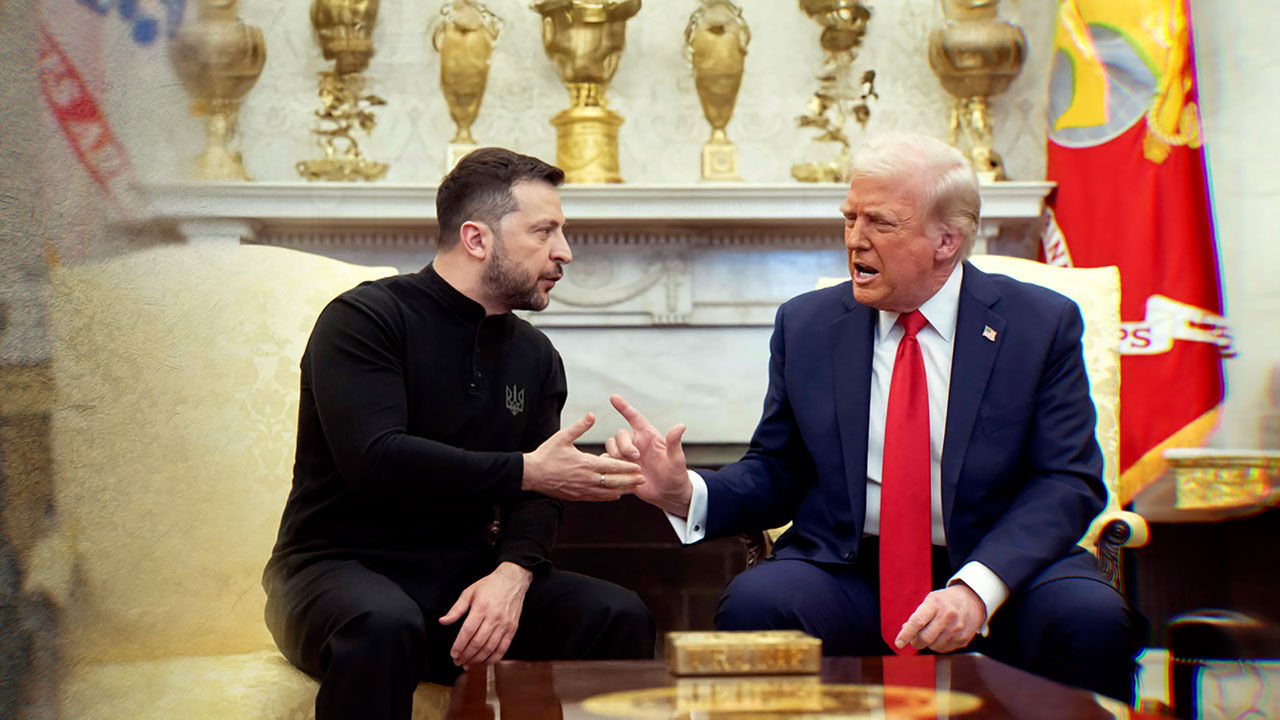
During the meeting, Trump reportedly told Zelensky, “Without us, you have no leverage.” He later suggested that a peace deal “would not be difficult to achieve” and hinted at resuming negotiations over the minerals agreement. (AFP Yonhap News File photo)
SEOUL, March 4 (Korea Bizwire) — U.S. President Donald Trump has abruptly suspended all military aid to Ukraine, escalating tensions with Kyiv and raising broader concerns among allies who depend on American security and economic support.
According to Bloomberg News on March 3, Trump ordered an immediate halt to U.S. military assistance to Ukraine, including shipments already in transit, until Ukrainian leaders demonstrate what he calls “a good-faith commitment to peace.”
The decision could have devastating consequences for Ukraine, which has relied heavily on U.S. aid to resist Russia’s invasion. The Kiel Institute for the World Economy estimates that the U.S. has provided $119.7 billion (174.5 trillion won) in military assistance to Ukraine since 2022.
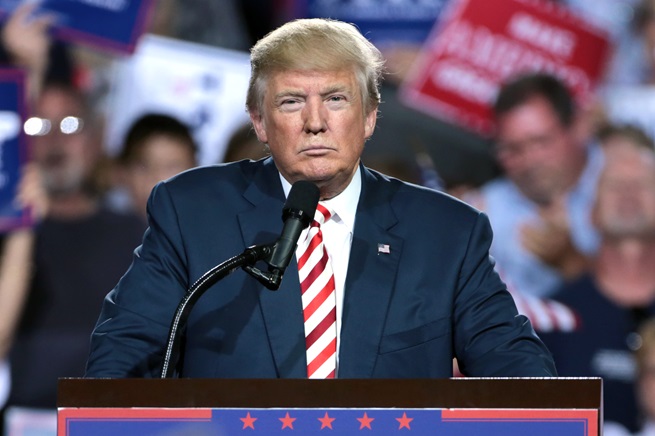
South Korean exports could drop between $5.3 billion and $44.8 billion if Trump implements his tariff policies and trading partners respond with equivalent measures against the United States. (Image courtesy of Wikimedia Commons)
A High-Stakes Pressure Tactic
Trump’s move appears aimed at forcing Ukrainian President Volodymyr Zelensky to accept a U.S.-proposed peace deal, which Kyiv has so far rejected. It also follows a heated February 28 summit where Trump and Zelensky reportedly had a tense exchange, after which Zelensky left the White House abruptly and negotiations over a critical mineral agreement collapsed.
During the meeting, Trump reportedly told Zelensky, “Without us, you have no leverage.” He later suggested that a peace deal “would not be difficult to achieve” and hinted at resuming negotiations over the minerals agreement.
By leveraging Ukraine’s reliance on U.S. military aid, Trump appears to be applying his signature transactional diplomacy, a strategy that has raised alarms among U.S. allies, including South Korea.
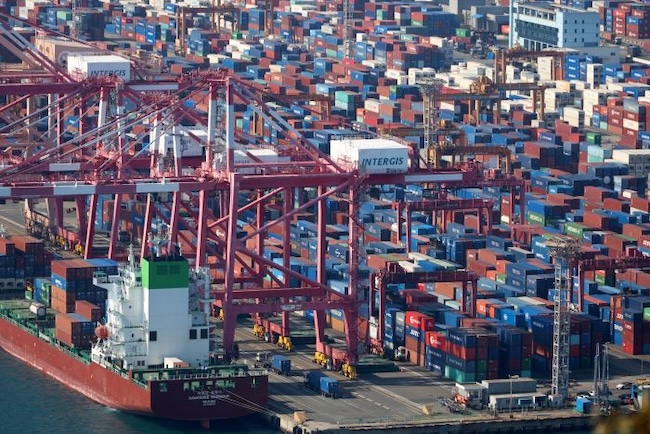
This file photo shows a container yard in South Korea’s southeastern port city of Busan (Image courtesy of Yonhap)
Implications for South Korea and U.S. Allies
Trump’s “America First” approach, which prioritizes U.S. economic and strategic interests over traditional alliances, has intensified concerns in Europe and East Asia.
South Korea, in particular, faces potential pressure over defense cost-sharing and U.S. troop presence. During his 2024 election campaign, Trump referred to South Korea as a “rich country” and a “money machine”, fueling speculation that he may demand a renegotiation of defense contributions for U.S. Forces Korea (USFK).
Under the Special Measures Agreement (SMA), Seoul and Washington finalized a five-year defense cost-sharing deal in October 2024, just before the U.S. election. South Korea’s contribution for 2025 is set to rise 8.3% to 1.5192 trillion won ($1.05 billion), but concerns persist that Trump could seek to scrap the agreement and push for further increases.
Moreover, Trump’s decision to abandon Ukraine raises security concerns for South Korea, given his past unpredictable diplomacy with North Korean leader Kim Jong-un. His past affinity for authoritarian leaders, including Russian President Vladimir Putin, has sparked fears that he could pursue unilateral negotiations with Pyongyang, potentially sidelining South Korea in any future peace talks.
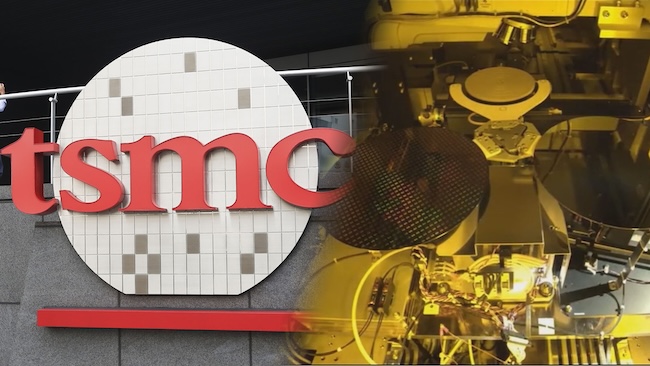
Taiwan’s 100 largest companies by market capitalization have surpassed their South Korean counterparts in terms of total market value and operating profits. (Image courtesy of Yonhap)
Taiwan on High Alert
Taiwanese officials are also closely monitoring developments, wary that Trump’s Ukraine strategy could foreshadow a similar approach toward China. Concerns escalated after Taiwan Semiconductor Manufacturing Company (TSMC) announced a $100 billion investment in the U.S., a move some speculate was driven by fears of U.S. disengagement from Taiwan’s security.
Asked whether China might interpret the U.S.-Ukraine split as an opportunity to advance its claims over Taiwan, Trump responded, “That would be a catastrophic event.” He emphasized that TSMC’s investment would help secure critical industries within the U.S.
Unlike previous U.S. administrations, which maintained strategic ambiguity on defending Taiwan, Trump has been noncommittal. In September 2023, he told NBC that he would not reveal whether the U.S. would defend Taiwan, stating, “If I say it, I give it away for free.”
Trump’s Broader Trade War Escalation
Beyond Ukraine, Trump has intensified his trade war strategy, targeting Canada and Mexico with a 25% tariff on imports. Initially delayed, the tariffs are set to take effect on March 4, with Trump declaring there is “no further room for negotiation.”
As the Trump administration’s hardline policies reshape global geopolitics, allies such as South Korea, Taiwan, and the European Union must navigate a more uncertain and transactional relationship with Washington.
M. H. Lee (mhlee@koreabizwire.com)