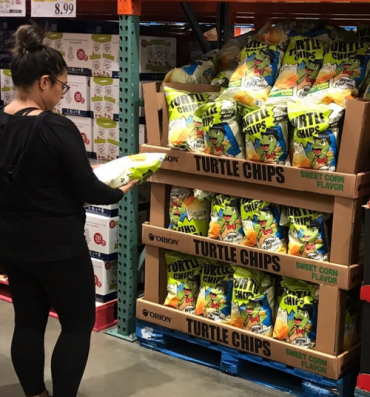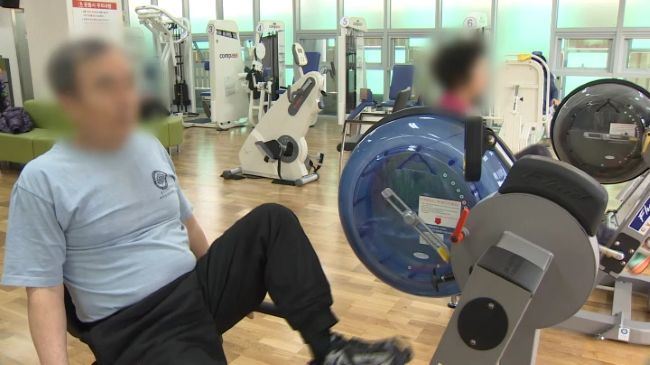
The top 20 percent of credit card users aged 60 and over — dubbed “active seniors” — increased their monthly average spending. (Image courtesy of Yonhap)
SEOUL, May 6 (Korea Bizwire) — Despite persistent inflation and slowing economic growth, a growing segment of affluent older South Koreans is defying conventional spending patterns, embracing digital platforms and youth-driven consumer trends, a new study reveals.
According to data released Monday by Shinhan Card’s Big Data Research Center, the top 20 percent of credit card users aged 60 and over — dubbed “active seniors” — increased their monthly average spending from 1.61 million won to 1.77 million won between mid-2022 and mid-2024, a 10 percent rise.
In contrast, average monthly spending among the broader 60-plus demographic fell by 22.6 percent during the same period, from 530,000 won to 410,000 won.
The report defines “active seniors” as the highest-spending quintile within the older population. This group tends to skew younger, with 55 percent aged between 60 and 64, compared to 38 percent in the general senior cohort.
What sets them apart is not just their spending power, but where they spend it.
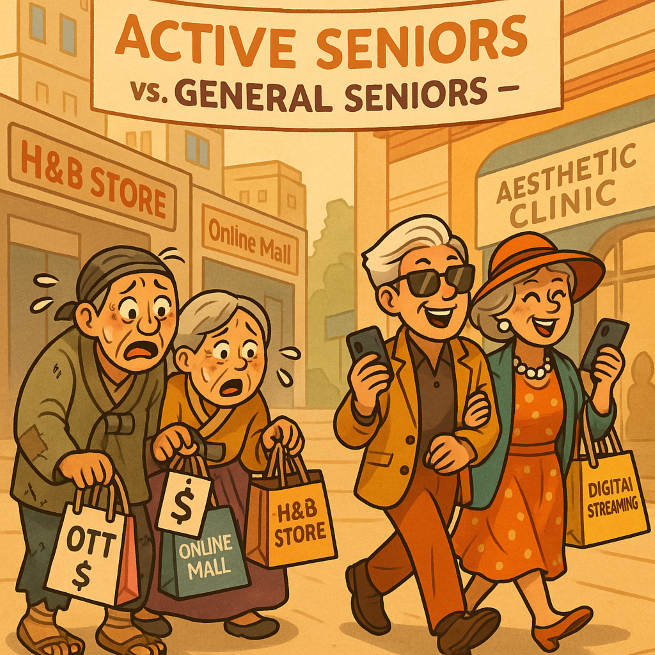
Amid inflation and slowdown, top-spending retirees embrace e-commerce, aesthetics, and digital trends once dominated by youth. (Image supported by ChatGPT)
Active seniors are increasingly frequenting online malls, health and beauty (H&B) stores, budget household goods shops, and even aesthetic service providers — all categories typically associated with younger consumers.
For instance, their online mall transaction volume surged 76 percent over the past two years, while spending per person climbed 8 percent to 255,000 won. Meanwhile, overall seniors saw only modest growth in online usage and a steep 21.2 percent decline in per-person spending.
The contrast is equally pronounced in physical retail. Between June and November 2024, active seniors spent more per visit at H&B stores (36,000 won vs. 30,000 won) and budget lifestyle retailers (15,000 won vs. 13,000 won) compared to their peers.
Their visit frequency to such stores also rose sharply — by 13 percent and 36 percent respectively — while general seniors showed much smaller gains.
Appearance-related spending also saw strong momentum among active seniors. Over the past two years, their visits to hair salons increased by 27 percent, and visits to dermatology or plastic surgery clinics by about 20 percent — nearly double the rate seen among general seniors.
In the digital entertainment space, older consumers at large pulled back due to cost pressures, with usage of paid OTT services falling by 11 percent in volume and 8 percent in spending. Yet, active seniors once again bucked the trend, increasing their usage by 9 percent and spending by 18 percent.
The data underscores a growing bifurcation within Korea’s aging population — between those scaling back amid financial pressure, and those embracing an increasingly tech-savvy, appearance-conscious, and consumption-driven lifestyle.
Ashley Song (ashley@koreabizwire.com)