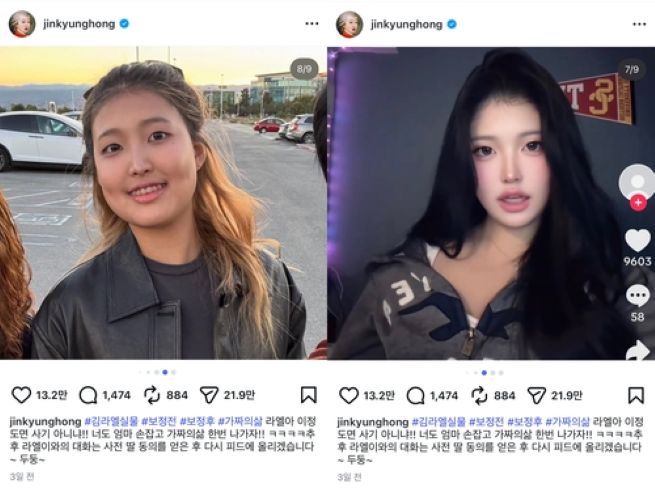
Photos posted by broadcaster Hong Jin-kyung showing her teenage daughter before (left) and after digital editing. (Source: Instagram app capture)
SEOUL, Feb. 12 (Korea Bizwire) — With a swipe of a finger, the jawline narrows, cheekbones recede, eyes widen and skin turns a luminous shade of pink. What once required a surgeon’s scalpel can now be achieved instantly and for free on a smartphone.
Across South Korea’s social media platforms, a growing number of teenagers are embracing what they casually call “digital plastic surgery” — real-time photo and video editing tools that reshape faces and bodies before they are posted online.
The phenomenon, driven by apps such as TikTok and a range of popular beauty filters, reflects both the country’s entrenched beauty culture and a new generation’s fluency with technology.
Unlike the playful trend of adopting cartoon avatars or celebrity profile pictures, these edits are often subtle, designed to make the altered image appear natural. Filters can slim a face, lengthen legs or refine facial contours in motion, blurring the line between reality and enhancement.
For many adolescents, the edits feel less like vanity than self-protection. “I like my edited face better than my real one,” said a 15-year-old student in Seoul, explaining that she hesitates to post photos without adjusting her jawline. Another described how influencers’ filtered videos feel so seamless that they appear real, fueling a quiet desire to look the same.
The issue recently gained national attention after broadcaster Hong Jin-kyung publicly addressed speculation that her teenage daughter had undergone cosmetic procedures, clarifying that the images in question were heavily filtered.
Their exchange sparked debate online, with some defending digital editing as harmless fun and others warning that it may deepen insecurities.
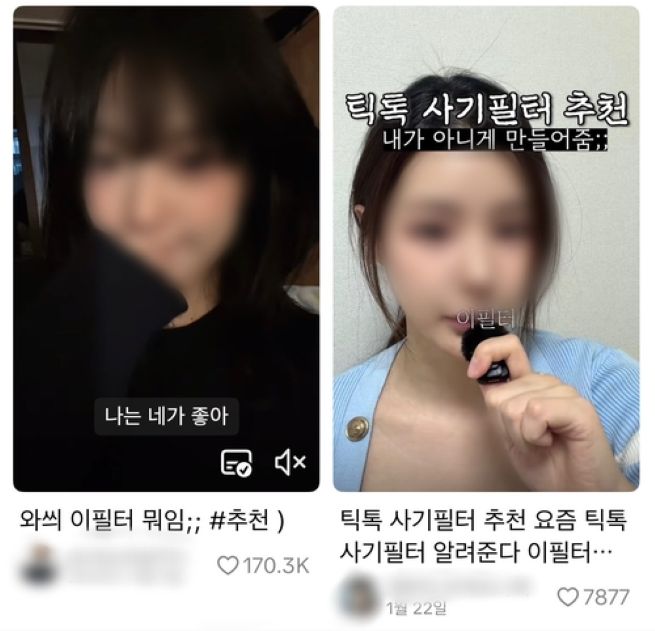
Videos recommending “scam filters” on TikTok. (TikTok app capture)
Critics argue that relentless exposure to perfected images intensifies appearance anxiety in a country already marked by fierce academic and social competition. On social media, users trade advice on how to “cure” what they jokingly call “appearance obsession,” often by deleting Instagram or TikTok. Yet others say removing filters would only heighten their distress.
Psychologists caution that adolescence is a critical period for identity formation. Excessive reliance on edited images, they say, risks distorting self-perception. “It is not just about appearance,” one professor of psychotherapy noted. “It becomes a question of how young people come to accept themselves.”
South Korea’s long familiarity with cosmetic surgery has made physical enhancement culturally unremarkable. Now, as digital tools become more sophisticated and accessible, the quest for refinement has migrated online — immediate, inexpensive and invisible.
Whether digital editing remains a passing trend or deepens into a broader mental health challenge may depend on how families, schools and policymakers respond to the pressures embedded in the scroll.
Lina Jang (linajang@koreabizwire.com)