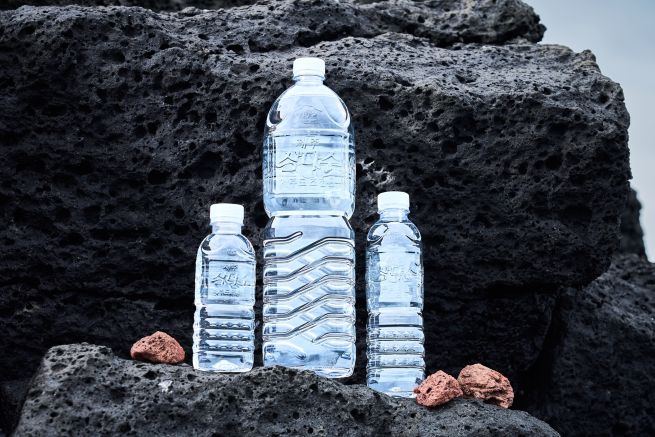
Product image of Jeju Samdasoo, widely known as the epitome of clean, premium bottled water (photo provided by the Jeju Province Development Corporation).
JEJU, Dec. 17 (Korea Bizwire) — South Korea’s best-known bottled water, Jeju Samdasoo, takes an average of 31 years to form as rainwater on Hallasan mountain slowly filters through layers of volcanic rock, according to new research published this week.
The Jeju Province Development Corporation, which produces and sells Samdasoo, said Wednesday that a peer-reviewed study in the November 2025 issue of the Journal of Hydrology has established the brand’s official “water age” at 31 years — one of the longest maturation periods among domestically produced natural mineral waters.
The findings revise a 2001 government estimate that Jeju groundwater required roughly 18 years to filter through the island’s volcanic aquifers. The updated assessment draws on seven years of data collected between 2016 and 2023, including rainfall samples, groundwater isotopes, environmental tracers and hydrochemical analysis.
Researchers from Korea University found that the water begins as precipitation falling at elevations above 1,450 meters within Hallasan National Park. It then travels slowly downward through porous basalt formations, undergoing decades of natural purification before reaching the aquifer tapped for bottling.
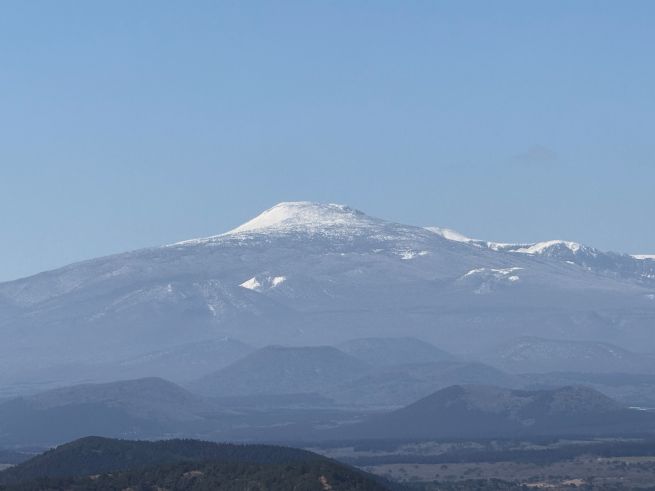
Snow-covered view of Hallasan Mountain. (Yonhap)
The study also confirmed that the recharge zone remains free of external pollutants and that the aquifer maintains stable water quality.
The development corporation said the findings scientifically validate Samdasoo’s long-standing marketing claims about the purity and stability of its source, offering “premium competitiveness” in a crowded bottled-water market.
In parallel, the company announced it had developed an artificial-intelligence-based groundwater prediction system to strengthen water-source management amid climate risks. Using 12 years of rainfall, pumping and groundwater-level data, researchers built deep-learning and neural-network models capable of predicting groundwater levels with 96 percent accuracy one month out during the dry season, and more than 72 percent accuracy over three months.
Officials said the technology will support drought preparedness and help optimize water extraction in the years ahead.
Lina Jang (linajang@koreabizwire.com)