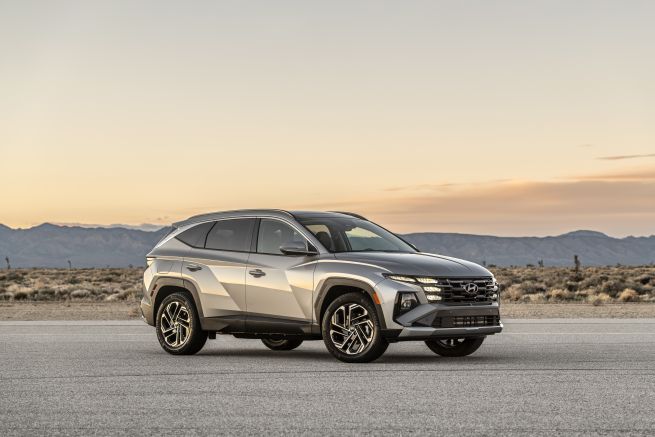
Hyundai Motor’s Tucson plug-in hybrid model. (Image courtesy of Hyundai Motor Group)
SEOUL, Oct. 20 (Korea Bizwire) — While Hyundai Motor struggles under tariff pressures in its largest market, the United States, the South Korean automaker is finding fresh momentum in Europe, buoyed by surging sales and strong demand for electric and hybrid vehicles.
According to Hyundai’s investor relations data released on October 19, the company’s passenger car sales in Austria more than doubled year-on-year in September to 1,966 units, marking a 102 percent increase and capturing a 7.6 percent market share — ranking third among all brands. From January through September, Hyundai sold 8,604 vehicles in Austria, up 28 percent from the same period in 2024.
The Tucson SUV led the charge, selling 455 units in September alone to become the sixth best-selling model in the country. The model’s hybrid and plug-in hybrid variants have gained wide recognition for eco-friendliness, topping Auto Motor und Sport’s rankings for environmental performance — a reflection of Hyundai’s growing credibility in Europe’s fast-moving electric transition.
Compact models tailored for European consumers, including the i10 and i20, also posted robust performances, placing 12th and 15th, respectively, in Austria’s monthly sales rankings.
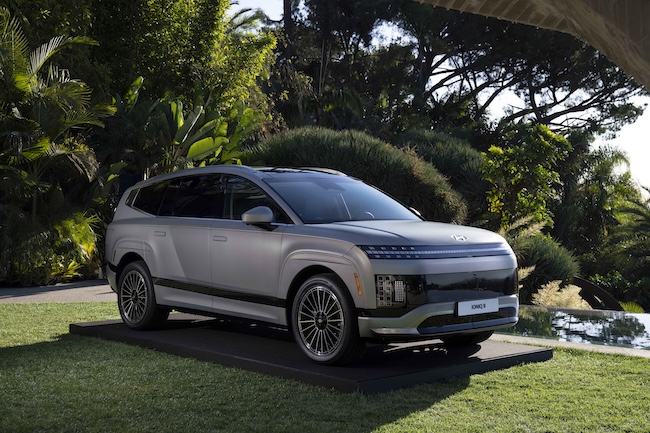
Hyundai’s Ioniq 9 (Image courtesy of Hyundai Motor)
In Germany — the home turf of global automotive giants — Hyundai’s large electric SUV, the Ioniq 9, was named “Premium Car of the Year” by the German Car of the Year (GCOTY) jury, a panel of leading automotive journalists.
The award, one of five categories spanning compact, premium, luxury, new energy, and performance vehicles, came just three months after the Ioniq 9’s launch in the German market.
Industry analysts said Hyundai’s win in the premium segment, traditionally dominated by Mercedes-Benz, BMW, and Porsche, signals a turning point for the company. “It shows Hyundai is no longer competing on price but on genuine brand and product strength,” one industry insider noted.
Hyundai plans to further consolidate its position in Europe by leveraging both its electric lineup, including the Ioniq series, and its Europe-focused compact models produced locally in Turkey and the Czech Republic. Local production, the company said, ensures faster delivery and stronger price competitiveness across the continent.
“We will continue expanding our market share through our European strategy models,” a Hyundai official said. “By focusing on eco-friendly and SUV-centered lineups, we aim to meet the diverse needs of European consumers.”
Kevin Lee (kevinlee@koreabizwire.com)