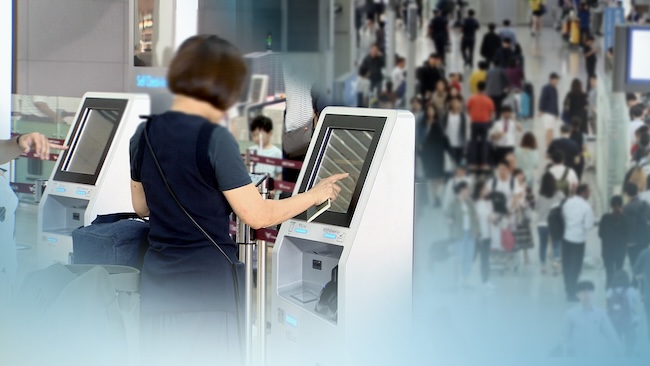
A kiosk (Image courtesy of Yonhap)
SEOUL, Dec. 26 (Korea Bizwire) —A recent survey revealed that small business owners using self-service kiosks are saving labor costs equivalent to employing approximately one staff member. However, the cost of adoption and operational hurdles remain significant concerns.
According to the Korea Federation of SMEs, 93.8% of 402 businesses, including restaurants, cafes, and PC rooms, reported that kiosks positively impacted their operations.
Key benefits cited were reduced labor costs and decreased workload. On average, businesses cut 1.2 employees and saved about 1.38 million won per month on wages.
Despite these advantages, 29.6% of respondents experienced challenges such as technical issues, limited customer support during late hours, lack of digital proficiency, and customer complaints. Additionally, 61.4% said the cost of purchasing or operating kiosks was burdensome.
Standalone kiosks cost an average of 3.56 million won to purchase, while tabletop models cost around 1.33 million won. Monthly rental costs averaged 100,000 won for standalone units and 190,000 won for tabletop versions.
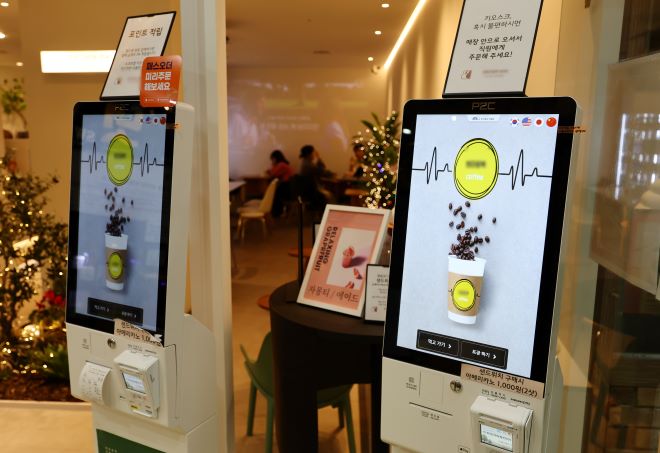
According to data from Statistics Korea and insights from the retail industry, as of 2023, approximately 2.62 million individuals in Korea were employed in sales, marking a decrease of 60,000 compared to the preceding year. The retail sector, a significant employer of sales personnel, witnesses a persistent decline in both the number of stores and employed staff, with unmanned checkouts, kiosks, and service robots progressively replacing human workers. In the accompanying image, a kiosk is showcased at a cafe located in Seoul. (Image courtesy of Yonhap)
Among franchisees, 96.3% said their headquarters did not subsidize kiosk installation costs, leaving them to bear the full expense.
The survey highlighted the need for government support, including kiosk maintenance subsidies, training for small business owners, user education for customers, and tighter regulation of kiosk fees.
Alarmingly, 85.6% of respondents were unaware of the upcoming requirement to install barrier-free kiosks, set to take effect on January 28, 2025. Under amended anti-discrimination laws, businesses with fewer than 100 employees must install kiosks accessible to the elderly and people with disabilities.
Small business owners have called for exemptions for micro-enterprises and increased subsidies to support compliance.
Ashley Song (ashley@koreabizwire.com)