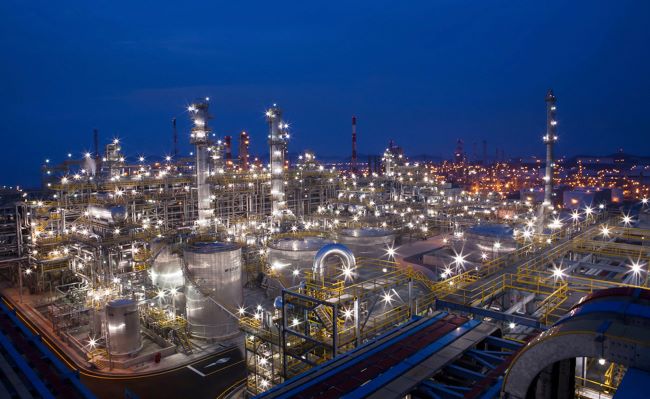
The panoramic view of the Seosan Daesan Petrochemical Industrial Complex. (Image courtesy of Seosan city)
SEOUL, Oct. 7 (Korea Bizwire) — South Korea’s petrochemical sector, battered by an oversupply wave from China and the Middle East, remains deadlocked over restructuring plans despite government pressure and mounting financial strain.
More than a month after companies agreed to draw up detailed restructuring blueprints by year’s end, no tangible progress has been made. Officials have grown increasingly vocal, warning that patience is running thin as firms stall in hopes of securing additional state aid.
Industry Minister Kim Jeong-gwan has personally visited industrial complexes in Ulsan to press companies to submit business reorganization plans, promising “tailored government support packages” once concrete steps are taken. The Ministry of Trade, Industry and Energy has also instructed firms to specify timelines, scale, and methods for restructuring in formal reports.
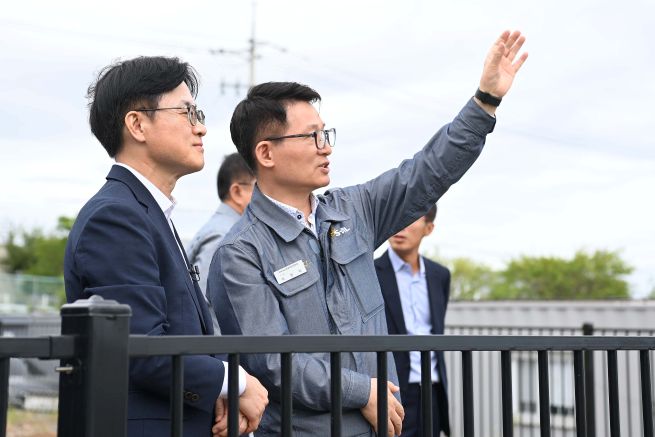
Minister of Trade, Industry and Energy Kim Jeong-gwan listens to a briefing from officials during his visit to S-Oil in the Ulsan Nam-gu petrochemical industrial complex on September 19, 2025. (Photo provided by the Ministry of Trade, Industry and Energy)
Financial regulators have joined the effort. The Financial Services Commission and major banks recently formed a joint creditors’ council to accelerate reform. But Deputy Chairman Kwon Dae-young criticized the industry’s inertia, saying that “no clear reduction targets or self-help plans have been presented” and warning that “this may be the last chance for voluntary restructuring.”
The standoff reflects deep rifts among companies. Few want to be the first to downsize, fearing competitive disadvantages in a market already squeezed by low margins. “No one wants to take the first hit,” one industry official said. “Without concrete support measures, mere pressure from the government won’t move things faster.”
Still, talks are inching forward. In the Daesan industrial complex, Lotte Chemical and HD Hyundai Chemical are reportedly exploring a merger involving HD Hyundai Oilbank, their joint refinery partner. In Ulsan, Daelim Industrial, SK Geocentric, and S-Oil have commissioned external consultants to devise restructuring strategies focused on scaling back outdated naphtha cracking facilities and shifting toward high-value chemical products.
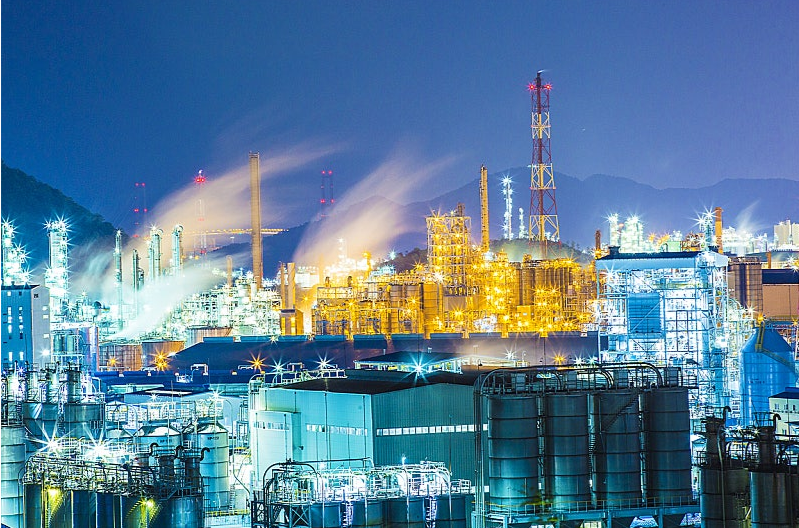
The Yeosu National Industrial Complex is the world’s largest single-site petrochemical hub, housing more than 280 companies. In Korea, a popular saying goes, “Don’t boast about your looks in Suncheon, your fists in Beolgyo, or your wealth in Yeosu”—a testament to Yeosu’s reputation as a symbol of economic prosperity in the southern part of the peninsula. (Photo courtesy of Jeollanam-do Province)
Elsewhere, LG Chem has proposed selling its naphtha cracking center (NCC) in Yeosu to GS Caltex to form a joint venture, though negotiations remain stalled. The oft-discussed merger between Lotte Chemical and YeoCheon NCC has also been hampered by unresolved tensions between Hanwha Solutions and DL Chemical, YeoCheon’s co-owners.
The government hopes to see visible progress by the end of October, but with competing interests and no clear financial incentives on the table, observers expect the process to drag on.
“The government’s determination is clear,” said one industry source. “But turning that determination into coordinated action across rival firms — that’s the real challenge.”
M. H. Lee (mhlee@koreabizwire.com)