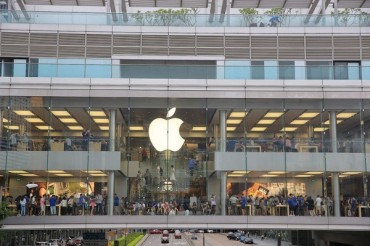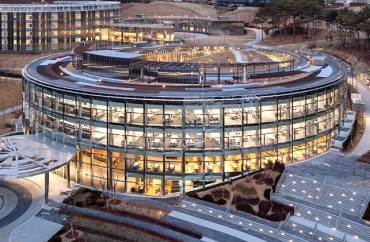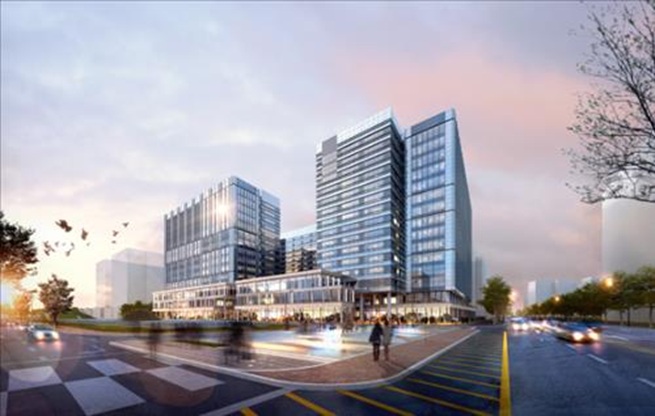
The knowledge industry centers, formerly known as ‘apartment-type factories,’ were once expected to serve as a catalyst for the innovation startup ecosystem. The image shows Hyundai E&C’s large-scale Hyundai Knowledge Industry Center located in the Munjeong-dong Business Park, Songpa-gu. (Image provided by Hyundai E&C)
SEOUL, Feb. 9 (Korea Bizwire) — As South Korea’s once-booming commercial real estate sector faces a downturn, banks are seeing a sharp rise in lawsuits from borrowers seeking to void their debt obligations.
Many of these legal disputes stem from investments in knowledge industry centers, a type of commercial property that had gained popularity as an alternative to regulated residential real estate.
According to data submitted by the country’s five major banks—KB Kookmin, Shinhan, Hana, Woori, and NH NongHyup—to the National Assembly’s Political Affairs Committee, the number of lawsuits filed against them surged to 618 cases in 2024, a 55.3% increase from 398 cases the previous year.
The total amount under litigation also jumped by 36.4% to 486.7 billion won ($335 million), while legal expenses rose by 23.8% to 10.6 billion won ($7.3 million).
Woori Bank saw the most dramatic increase, with lawsuits soaring 250% from 30 cases in 2023 to 105 in 2024. The disputed loan amount in these cases surged 143% to 73.4 billion won ($50.6 million).
Similar trends were observed at Shinhan Bank (92 cases, up 41.5%), NH NongHyup Bank (149 cases, up 77.4%), and Hana Bank (102 cases, up 183.3%).
While KB Kookmin Bank recorded a slight decline in lawsuits (down 7.1% to 170 cases), the total contested amount rose 86.8% to 216.5 billion won ($149.3 million), with legal expenses more than doubling.
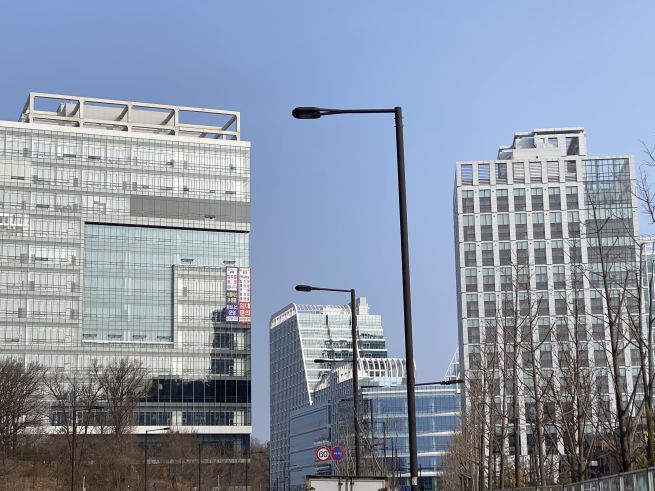
Hyangdong District in Deogyang-gu, Goyang City, where knowledge industry centers are clustered. (Yonhap)
The Rise and Fall of Knowledge Industry Centers
The surge in lawsuits is closely tied to the once-thriving market for knowledge industry centers—commercial buildings that house a mix of manufacturing, IT, and venture firms, often with dormitories and support facilities.
Popularized in areas like Pangyo Techno Valley, Guro Digital Industrial Complex, and Seongsu-dong, these properties became attractive investment opportunities during the COVID-19 pandemic.
Unlike residential real estate, knowledge industry centers were not subject to strict transfer restrictions, and investors could obtain loans covering 70–80% of the purchase price.
Many individual business owners took out collective loans to buy newly built units, expecting continued demand. However, as interest rates rose and an oversupply of units flooded the market, property values plummeted, and transactions slowed dramatically.
This led to disputes between buyers and developers, with investors alleging fraud in the sales process. Some are now suing banks, arguing that their loans—issued under what they claim were deceptive sales contracts—should be deemed invalid.
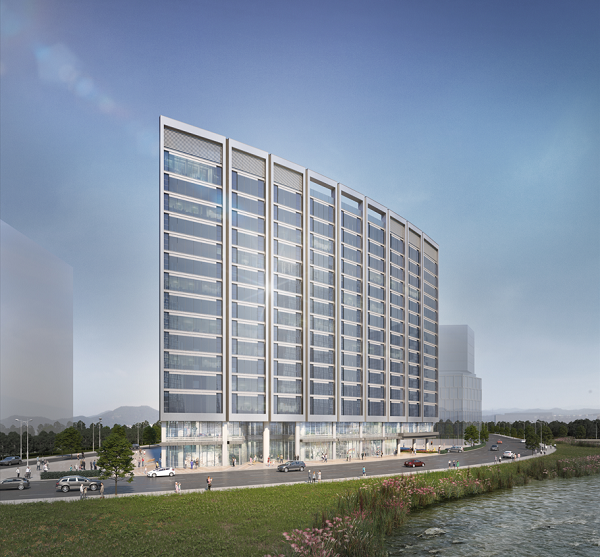
The knowledge industry centers, formerly known as ‘apartment-type factories,’ were once expected to serve as a catalyst for the innovation startup ecosystem. The image shows the Gwacheon Knowledge Industry Center Creation Tower located in Gwacheon. (Image courtesy of Gwacheon Creation Tower)
Legal and Financial Ramifications
“The majority of lawsuits we’re facing are from knowledge industry center buyers seeking to nullify their debts,” said a Woori Bank representative. “These borrowers argue that their contracts were fraudulent and that their loan agreements should be voided as a result, even though real estate purchase and loan agreements are separate legal matters.”
Hana Bank cited difficulties in leasing or reselling knowledge industry center units in cities like Pyeongtaek, Uiwang, and Guri as key factors driving the litigation. Meanwhile, a Shinhan Bank spokesperson noted that some buyers are also engaged in lawsuits against developers, claiming fraudulent sales practices.
Despite the rising legal disputes, banks remain confident about their legal standing. “Banks are likely to win in these cases, as the validity of the loan agreements is generally strong,” the Shinhan Bank representative added.
According to data from Real Estate Planet, as of the third quarter of 2024, transactions for South Korea’s 1,358 registered knowledge industry centers hit their lowest levels since 2020, both in volume and total value.
National Assembly member Lee In-young called for urgent government intervention, warning that the crisis poses risks to both financial stability and the broader economy. “The government must closely examine the oversupply of knowledge industry centers and implement measures to protect investors,” he stated.
As South Korea’s commercial real estate slump deepens, the financial sector faces mounting legal and regulatory challenges, underscoring the risks of speculative investment in an uncertain economic environment.
M. H. Lee (mhlee@koreabizwire.com)