Shadows of the Samcheong Camp: Court Acknowledges State Responsibility at Last (Yonhap)
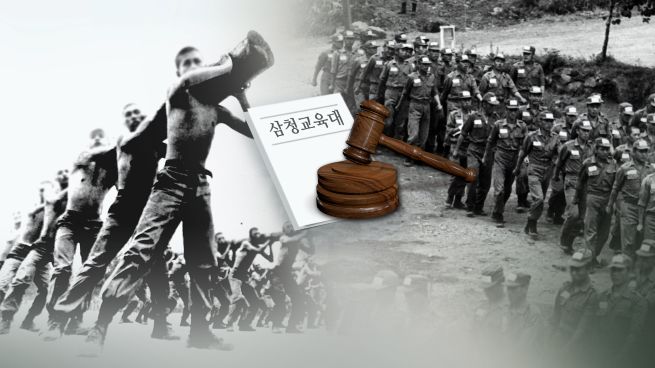
SEOUL, Dec. 31 (Korea Bizwire) — South Korea’s Supreme Court has ruled that the state can be held legally responsible for the death of a former detainee of the notorious Samcheong reeducation camps, recognizing a causal link between government misconduct and the victim’s suicide years after his release.
According to legal officials on Tuesday, the Third Division of the Supreme Court of Korea overturned a lower court ruling in part and sent the case back to the Seoul High Court for further review.
The top court held that the state’s illegal actions could be considered a contributing cause of the victim’s death, even though it occurred more than five years after his release from the camp.
The case was brought by the family of a man identified as A, a telecommunications cable worker who was forcibly sent to the Samcheong reeducation camp in August 1980 and released two months later. After leaving the camp, A received treatment for schizophrenia and died by suicide in 1986.
His family sued the state for damages, arguing that the harsh “purification education” he endured led to his mental illness and eventual death.
Lower courts had consistently acknowledged the government’s liability for unlawful detention and abuse of Samcheong camp victims. However, they diverged on whether A’s mental illness and death could be directly attributed to his time in the camp.
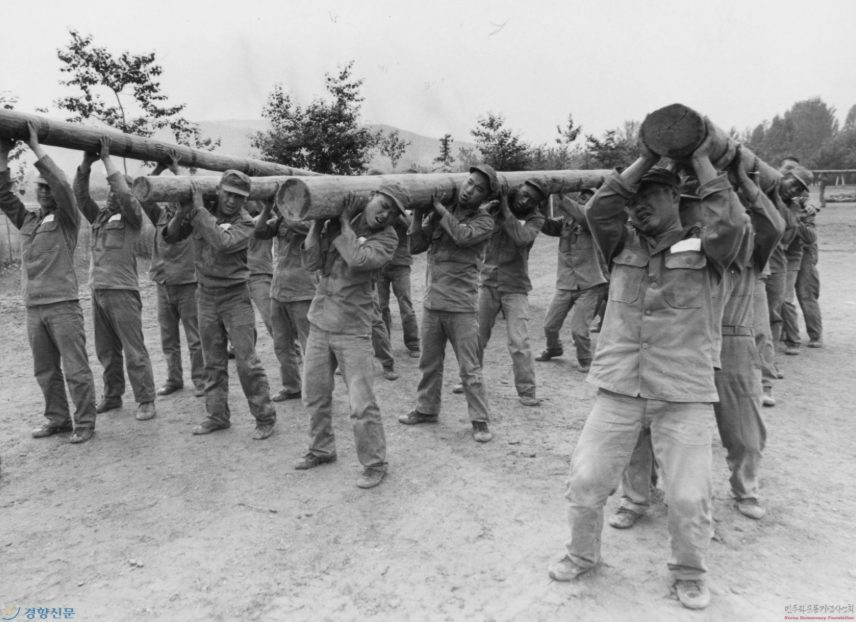
Baton exercises imposed on inmates at the Samcheong Reeducation Camp (Image courtesy of Korea Democracy Foundation)
A trial court initially ruled that the relatively short detention period and the time gap between his release and the onset of illness weakened the causal link. An appeals court later found that A’s previously good health and contemporaneous evidence, including letters expressing concern about his condition, supported the conclusion that his illness had been triggered by the camp experience.
While the appeals court increased compensation awarded to A’s family, it stopped short of recognizing state responsibility for his death, citing uncertainty over the precise cause of his suicide.
The Supreme Court went further, ruling that it was reasonable to infer that schizophrenia caused by the state’s illegal conduct led to a severe mental disorder that ultimately resulted in his death.
The court emphasized that legal causation does not require definitive medical or scientific proof. Instead, it said, courts should determine whether a “reasonable causal relationship” exists based on normative legal judgment.
In the same ruling, the Supreme Court rejected the government’s appeals in related cases brought by other former detainees, finalizing judgments that affirm the state’s duty to compensate them.
The decision is expected to broaden the scope of state liability for long-term harm suffered by victims of past authoritarian abuses and may influence future compensation claims tied to historical human rights violations.
The Story Behind Korea’s Laws: Your Guide to Korea’s Legal Pulse
Jerry M. Kim (jerry_kim@koreabizwire.com)