A scene from K-Pop Demon Hunters, in which characters eat an entire roll of kimbap in one bite, has sparked a flood of TikTok challenges and Instagram reels. (Screenshot from TikTok accounts ‘cookingWITHfred’, ‘Weebgast’, Image courtesy of Netflix)
SEOUL, July 31 (Korea Bizwire) — The humble Korean dish kimbap is enjoying a fresh wave of international acclaim, fueled by viral social media trends and a spotlight appearance in the hit Netflix animated film K-Pop Demon Hunters. The renewed craze is turning the traditional rice-and-seaweed roll into a global sensation—and a lucrative export.
A scene from K-Pop Demon Hunters, in which characters eat an entire roll of kimbap in one bite, has sparked a flood of TikTok challenges and Instagram reels. A TikTok clip titled “Rumi’s Kimbap” garnered over 442,000 views and 11,000 likes, while Instagram hashtags like #gimbap have racked up more than 180,000 posts. One kimbap-making reel featuring ingredient preparation and rolling techniques has surpassed 22 million views.
This latest surge follows last year’s viral success of frozen kimbap in the U.S. grocery chain Trader Joe’s, where a TikTok video by Korean-American influencer Sarah Ahn helped drive demand and sellouts. Her clip showing how to heat and eat the frozen rolls now has more than 14 million views.
The international appetite for kimbap is also showing up in export numbers. According to the Ministry of Agriculture, Food and Rural Affairs, exports of Korean processed rice products—including frozen kimbap—jumped 38.4% last year, with exports to the U.S. rising by a staggering 51%. Major food brand Pulmuone began exporting frozen kimbap to Chinese retailer Sam’s Club in September 2023, labeled boldly as “K-Street Food.”

The trend of recreating “Rumi’s Kimbap” from K-Pop Demon Hunters is taking social media by storm. (Photo courtesy of Netflix’s K-Pop Demon Hunters & TikTok users ‘erictriesit’, ‘blacklegbritty’ – screen captures)
Even The Washington Post took notice, publishing a feature in March 2025 titled “How Korea’s Kimbap Became a Global Sensation,” crediting its rise in part to cultural phenomena like the drama Extraordinary Attorney Woo, in which the protagonist’s daily kimbap breakfast captured hearts worldwide.
Yet as its popularity grows, kimbap’s origins are stirring debate. Though widely considered Korean, some argue it was influenced by Japan’s nori-maki during the colonial era. Historical records from 1925 and 1930 reference Japanese-style seaweed rice rolls in Korean newspapers.
However, Korean food historians and chefs stress key differences: kimbap uses sesame oil instead of vinegar, incorporates a wider variety of fillings, and traces seaweed consumption in Korea back to the 13th century. The debate echoes the distinction between Korean ramyeon and Japanese ramen.
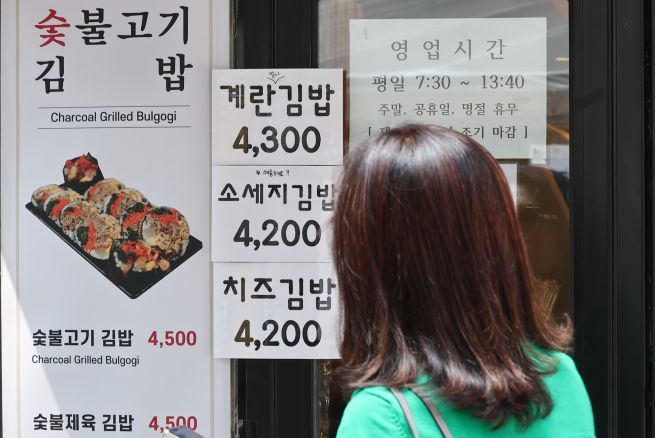
Beloved by Koreans, gimbap is a highly creative dish thanks to its versatility—allowing endless combinations of ingredients based on personal preference. The photo shows a passerby looking at a gimbap menu. (Yonhap)
Nutritionally, kimbap earns praise for its balance of ingredients. “It can serve as a complete meal if made with care,” said Chung Sang-jin, a nutrition professor at Kookmin University. “Reducing processed meats and increasing vegetables can enhance its health profile.”
As the dish has grown in status, so too has its price. Once a staple of affordable street food, kimbap is now offered in premium formats at prices upwards of 7,900 won ($6). Franchise shops like Kimbap Cheonguk and Baruda Kim Seonsaeng now offer varieties such as bulgogi, cream cheese walnut, and keto shrimp tempura kimbap.
However, with rising temperatures, health authorities are also issuing warnings. In July, over 130 people in Seoul fell ill after eating kimbap, prompting fresh scrutiny. The Korea Food and Drug Administration recommends strict hygiene measures in the summer, including refrigeration and prompt consumption.
“Kimbap can become contaminated during preparation,” said Dr. Kim Tak, an infectious disease expert at Soonchunhyang University Bucheon Hospital. “Given how easily bacteria multiply in warm, humid conditions, food safety practices are critical.”
From viral memes to grocery aisles, kimbap is carving out its place as a modern Korean cultural export—but with global acclaim comes the responsibility of preserving tradition, safety, and quality.
Lina Jang (linajang@koreabizwire.com)