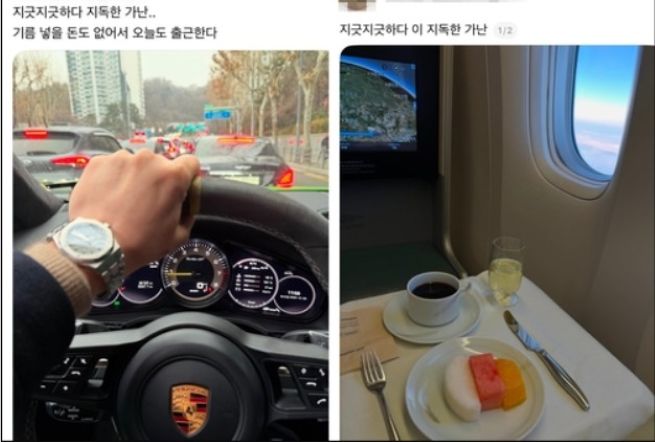
Viral ‘Poverty Memes’ Highlight Korea’s Growing Wealth Divide (screenshot image from an online community)
SEOUL, Dec. 26 (Korea Bizwire) — A new social media trend in South Korea that pairs exaggerated claims of poverty with images of conspicuous wealth is drawing growing backlash, as critics argue that the so-called “poverty meme” trivializes real economic hardship in a country marked by widening inequality.
The trend, popular on the platform Threads, typically features captions lamenting “crushing poverty” alongside photos of luxury cars, high-end vacations or stacks of cash placed atop instant noodles.
One widely shared post showing ramen and gimbap next to a Ferrari key drew more than 1,300 likes and hundreds of comments, spawning a cascade of similar responses portraying affluent lifestyles cloaked in ironic self-pity.
Supporters describe the posts as harmless satire, often responding with jokes such as “elite-level poverty” or “top 10 percent poverty.” But criticism has mounted from users who say the meme crosses a line by turning deprivation into a punchline.
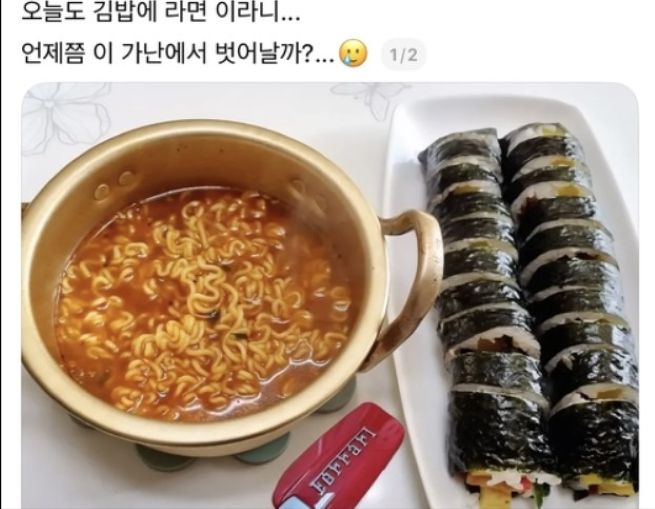
Humor or Harm? Korea Debates the Rise of ‘Poverty Cosplay’ Online (screenshot image from an online community)
“This goes too far,” said a 24-year-old university student who asked to be identified only by his surname Kim. “If you want to brag, just brag. Don’t use poverty as a prop.”
The backlash gained momentum after a user posted an appeal on Dec. 20 urging others to stop the trend, a message that garnered more than 2,600 likes. Many commenters argued that poverty is not a subject for irony or play, particularly at a time when young people face high housing costs, job insecurity and rising living expenses.
Public figures have also weighed in. Kim Dong-wan, a singer and actor, wrote that the meme could not be defended as self-deprecating humor. “There are words you shouldn’t use for laughs,” he said, adding that the posts treat others’ deprivation as a decorative element.
Some users have drawn parallels to “Stolen Poverty,” a 1975 short story by the late novelist Park Wan-seo, in which a wealthy man masquerades as poor to experience hardship, only to expose the cruelty of such performative empathy. Online commenters have cited the work as an uncannily apt critique of what they describe as “poverty cosplay” now spreading on social media.
Sociologists say the trend reflects deeper tensions in South Korean society. Heo Jun-soo, a professor of social welfare at Soongsil University, noted that rapid economic development has sharpened status competition and heightened sensitivity to displays of wealth. In a society where redistribution remains limited, he said, ironic portrayals of poverty risk obscuring the lived realities of those who struggle.
“The popularity of these memes shows how detached people can be from the hardships faced by low-income groups,” Professor Heo said. “It points to a lack of understanding—and a need for greater social attention to vulnerable communities.”
The controversy echoes earlier debates, including criticism of online “poor rooms” in 2023 where users shared frugal spending habits, sometimes blurring the line between solidarity and mockery. This time, however, the backlash suggests a growing discomfort with humor that many see as amplifying inequality rather than easing it.
Lina Jang (linajang@koreabizwire.com)