

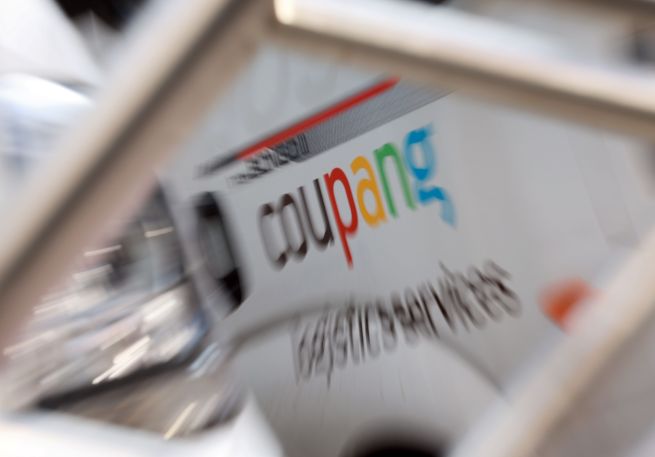
Delivery trucks are parked at a Coupang depot in Seoul. (Yonhap)
SEOUL, Jan. 22 (Korea Bizwire) — Two major U.S. investment firms backing Coupang have asked the United States government to investigate what they describe as discriminatory treatment by South Korean authorities, raising the prospect that a domestic regulatory dispute could escalate into a bilateral trade issue.
Reuters reported Thursay that Green Oaks Capital and Altimeter Capital submitted a petition to the Office of the United States Trade Representative, urging it to examine Seoul’s actions toward Coupang and consider trade remedies, including tariffs or other sanctions. The investors have also filed a request for arbitration against the South Korean government under the Korea–U.S. Free Trade Agreement, the report said.
The move follows a massive data breach disclosed by Coupang in late 2025, in which roughly 33.7 million personal records were exposed without authorization. South Korean authorities have since launched a broad investigation involving outside experts.
According to the investors, the government’s response has gone beyond normal regulatory enforcement. They argue that following the breach, authorities mounted what they described as a coordinated campaign against Coupang, extending scrutiny into areas such as labor, finance and customs that they say are unrelated to the data incident. The firms claim the actions have inflicted multibillion-dollar losses on investors.
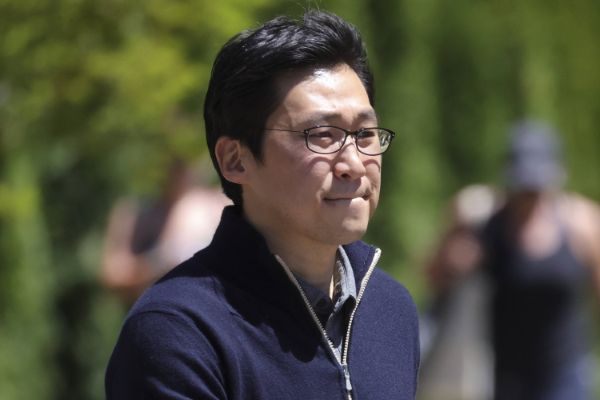
Bom Kim, chairman of Coupang, is facing criticism for snubbing the parliamentary hearing despite the fact that roughly 90 percent of Coupang’s revenue comes from the South Korean market. (Photo courtesy of Yonhap)
Coupang’s share price has fallen about 27 percent on the New York Stock Exchange since the company disclosed the breach on Nov. 30.
A representative of Covington & Burling, the law firm representing Green Oaks, told Reuters that the principal concern was “the scale and speed” of the government’s response, which they said had posed a serious threat to investment value. The investors said their aim was to halt what they view as discriminatory practices and restore a fair and predictable business environment for U.S. companies operating in South Korea.
Reuters noted that the petition reflects an effort to invoke U.S. trade law and international agreements to challenge South Korea’s actions — a step that could turn a corporate dispute into a government-to-government trade conflict.
Under the arbitration process, a 90-day cooling-off period applies before formal proceedings can begin. Separately, the USTR has up to 45 days to decide whether to open an official investigation. If launched, such a probe could ultimately lead to U.S. retaliatory measures, including tariffs on Korean goods or services.
Coupang’s South Korean unit is wholly owned by its U.S.-listed parent company, Coupang Inc.
South Korean officials have pushed back against claims of discrimination. During a recent visit to Washington, Trade Minister Yeo Han-koo said the government was not targeting any specific U.S. company, emphasizing that the core issue was the scale of the data leak and shortcomings in Coupang’s response. He added that enforcement actions were being carried out fairly and without discrimination, and should be kept separate from trade and diplomatic considerations.
Kevin Lee (kevinlee@koreabizwire.com)



Thank you, I enjoyed it very much and learned a lot